Choosing a Baby Crib Blanket in 2026 means looking beyond color and softness. A pale cotton quilt may photograph beautifully, yet still feel too warm against a baby’s skin. Fabric weight, breathability, seams, dyes, and washing instructions all deserve a closer look. Small details matter.
Sleep safety comes before style. Pediatrician Dr. Rachel Moon, a leading safe-sleep expert, has emphasized keeping loose blankets out of an infant’s sleep space. That guidance matters: for babies under 12 months, a blanket should not be used in the crib during sleep. Parents can instead consider an appropriately sized wearable blanket, while following current advice from their child’s healthcare professional. A crib blanket may still suit supervised cuddles or room décor, but those uses are different from overnight bedding.
This guide will help you compare natural and synthetic fibers, check dimensions, assess warmth, and spot construction details that can affect comfort. Look closely at labels. Feel the fabric after washing, not only in the shop. A material that seems gentle at first can become rough or shrink. And no single blanket works for every home. Room temperature, laundry routines, and a baby’s sensitivities all change the decision. Even careful shopping has limits; a product description cannot replace safe-sleep guidance or hands-on judgment. The best choice is practical, washable, and suited to how—and when—you plan to use it.
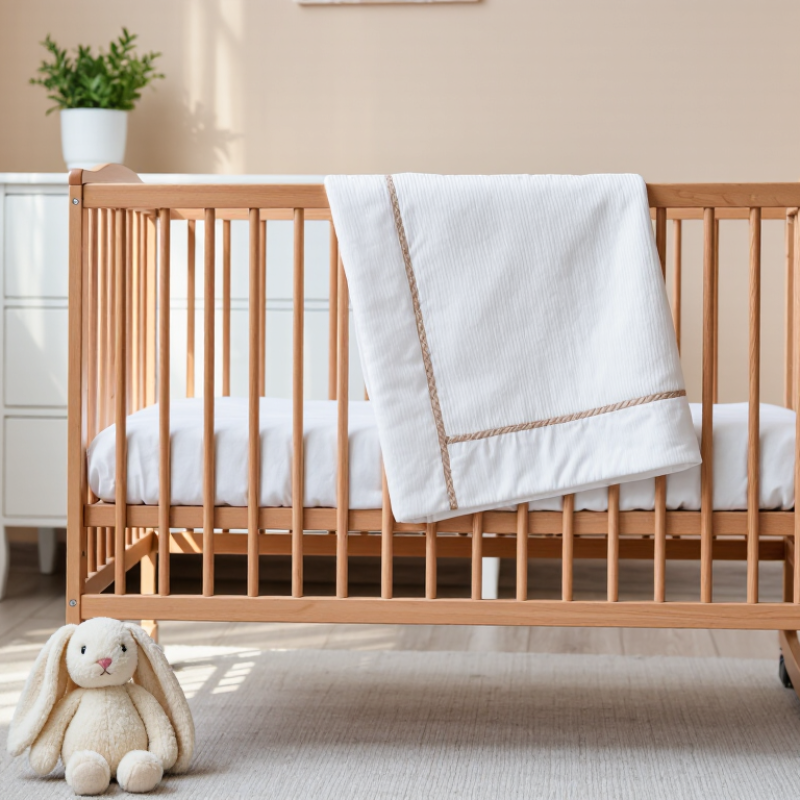
Determine Whether Your Baby Is Ready for a Crib Blanket
Before choosing a crib blanket, check your baby’s age, not how sturdy they look. The American Academy of Pediatrics’ 2022 safe-sleep recommendations advise keeping loose blankets and other soft bedding out of an infant’s sleep space during the first year. Rolling, sitting, or pulling to stand does not override that guidance.
Not yet.
These milestones can make a baby seem ready, but they do not show that loose bedding is safe.
CDC surveillance recorded about 3,700 sudden unexpected infant deaths in the United States in 2022. That total covers several causes; it is not a blanket-specific risk estimate.
Still, it reinforces the value of a clear sleep space. After your baby’s first birthday, ask your pediatrician about bedding if your child was premature or has breathing or developmental concerns. If you introduce a blanket, choose a light, small one and avoid weighted bedding. Check that it cannot bunch over the face or tangle around little legs.
A birthday is a checkpoint, not a magic switch.
Review Safe-Sleep Guidance Before Shopping
Before shopping, check current safe-sleep guidance—not just blanket labels or fabric descriptions. For babies under 12 months, public-health guidance recommends keeping loose bedding, including blankets, out of the sleep space. A firm, flat mattress with a fitted sheet is the safer setup. Place the baby on their back for every sleep. That matters.
If your baby needs warmth, ask a pediatric health professional about suitable sleep clothing, such as a correctly sized wearable blanket. Avoid products that are weighted, oversized, or designed to cover the face. A soft, fluffy texture may feel comforting to an adult, but softness alone says nothing about safe use. I would pause before treating “breathable” or “natural” as proof of safety; those words do not replace sleep guidance.
When a child is old enough for a loose blanket under the guidance you follow, check its size, construction, and care instructions. Choose a simple, lightweight option without long ties, loose decorations, or thick padding. Make sure it can be washed regularly and remains intact after laundering. If advice seems unclear, ask your child’s pediatrician before adding bedding. It is easy to overlook the sleep setup while comparing colors and textures. Don’t rush that part.
How to Choose a Baby Crib Blanket in 2026? — Review Safe-Sleep Guidance Before Shopping
| Shopping Consideration |
Safe-Sleep Guidance |
Practical Choice |
| Baby younger than 12 months |
Keep loose blankets and other soft items out of the sleep space. |
Do not use a crib blanket for sleep. Use a properly fitted wearable blanket if an extra layer is needed. |
| Sleep surface |
Use a firm, flat, non-inclined mattress with a tightly fitted sheet. |
Check that the mattress fits the crib as specified by its manufacturer. Keep pillows, quilts, bumpers, and toys out of the sleep space. |
| Sleep position |
Place babies on their backs for every sleep, including naps. |
A blanket does not replace back-sleep positioning or a clear sleep space. |
| Wearable blanket fit |
A wearable blanket is clothing, not loose bedding, when used as directed. |
Choose the correct weight and size; make sure the neck and arm openings fit so the garment cannot slip over the face. |
| Warmth and layers |
Overheating should be avoided. There is no single clothing or room-temperature choice that suits every baby. |
Dress the baby for the room, avoid excessive layers, and check for signs of overheating such as sweating or a hot chest. |
| Fabric and construction |
No fabric type makes a loose blanket safe for an infant under 12 months. |
For a wearable blanket, follow its care label and avoid damaged seams, loose parts, long ties, or added decorations. |
| Blanket dimensions |
A particular blanket size does not remove the risks of loose bedding in an infant sleep space. |
Do not shop for a blanket to place in the crib during the first 12 months. If considering one later, prioritize the child’s developmental readiness and keep the sleep area uncluttered. |
| Swaddling and rolling |
Stop swaddling as soon as the baby shows signs of trying to roll. |
Do not use a swaddle that restricts the arms once rolling attempts begin; choose an appropriate, arms-free sleep garment instead. |
| Care and condition |
Follow product instructions and keep sleep clothing in good repair. |
Wash as directed and replace wearable sleep garments with broken fasteners, torn fabric, or a fit that no longer matches the size guidance. |
Key takeaway: For babies younger than 12 months, the safest crib setup is a firm, flat sleep surface with a fitted sheet and no loose blanket. A wearable blanket may be used according to its fit and care instructions.
Compare Blanket Materials, Weight, and Breathability
Before comparing materials, consider where and when the blanket will be used. The American Academy of Pediatrics’ 2022 safe-sleep recommendations advise keeping loose blankets and other soft bedding out of an infant’s sleep space during the first year. The AAP reports about 3,500 sleep-related infant deaths annually in the United States. That number includes many causes, not blankets alone. For babies under 12 months, choose a properly fitted wearable sleep garment for sleep instead. Not a loose blanket.
For supervised use, or for an older child, compare fabric feel, warmth, and construction. Lightweight cotton is often comfortable in warmer rooms; fleece may feel warmer and can be too insulating in a heated room. Check the blanket’s weight in your hands, and look for secure seams, without loose threads or decorative pieces. The AAP also advises avoiding overheating and keeping an infant’s head uncovered. “Breathable” on a label is not proof of safe sleep. I would treat that wording cautiously; it does not replace a clear sleep space or guidance from a pediatric clinician. A thin blanket can still bunch near a baby’s face.
Select a Suitable Size and Secure Construction
Choosing a baby crib blanket in 2026 means checking size and construction, not just softness. For infant sleep, keep loose blankets out of the crib; a firm, empty sleep space is safer. If warmth is needed, consider an appropriately sized wearable blanket and follow current pediatric safe-sleep guidance. A crib blanket may be more suitable for supervised cuddles or use when a child is older and ready.
Measure the area where the blanket will be used, then choose one that won’t trail onto the floor or bunch around a child. Check the edges and seams closely. They should lie flat, with no loose threads, long fringe, ties, buttons, or small decorations. A simple, tightly finished design is easier to inspect after washing. Soft fabric matters, but it is easy to overlook a rough seam.
Tips: Tug gently at the seams and inspect the blanket after each wash. Skip weighted blankets for babies. If the intended use is unclear, ask a pediatric health professional; I would rather check twice than guess.
Check Product Labels, Care Instructions, and Safety Recalls
How to Choose a Baby Crib Blanket in 2026?
Read the product label before buying. Check the stated age range, fabric content, dimensions, and any warnings. A soft feel alone does not show whether a blanket suits your child. Look for clear care instructions, too. For babies under 12 months, loose blankets should stay out of the sleep space; use a firm, flat mattress with a fitted sheet instead. A crib blanket may be more appropriate for supervised use or when your child is older.
Care instructions can reveal practical details. If the blanket needs cold washing or air-drying, consider whether that fits your routine. Inspect seams, ties, and decorative pieces after washing; loose threads or detached parts may pose hazards. Before using a product, search the relevant official product-safety recall database in your country. Check again occasionally, since recall notices can appear after purchase. If the item is recalled, stop using it and follow the notice’s directions. Small print is easy to miss.
Tips: Keep the label until you have checked the care and recall information. Take a quick photo of it. I sometimes forget where packaging goes.
Conclusion
Choosing a Baby Crib Blanket in 2026 starts with deciding whether your baby is ready for one. For young infants, a clear sleep space without loose bedding is generally the safer choice; check current safe-sleep guidance and ask your pediatrician before introducing a blanket. When a blanket is appropriate, consider how its material, weight, and breathability suit the room temperature and your baby’s needs. Avoid overly heavy or poorly ventilated fabrics that could make your baby too warm.
Choose a size that fits the intended use without excess fabric, and look for secure seams and a construction that is unlikely to unravel. Before buying, read the product label for materials and care instructions, and check whether the blanket can be cleaned as needed. Inspect it regularly for loose threads, damage, or changes in condition, and review available safety-recall information. These steps can help you make a thoughtful choice while keeping safe sleep the priority.

 Jiayu