Choosing China’s best Kids Room Storage suppliers requires more than comparing product photos and factory prices. The right partner must combine safe design, consistent production, clear documentation, and practical experience with children’s furniture. Parents need storage that survives daily use, from toy boxes opened repeatedly to low shelves carrying picture books and school bags.
Market data supports this category’s growing relevance. Grand View Research reports continued expansion in the global home furniture market, driven by urban living, organized interiors, and online retail. Mordor Intelligence also identifies modular and space-saving furniture as important growth segments. These reports do not isolate Kids Room Storage perfectly. That limitation matters. Supplier claims should not replace independent verification.
A reliable Chinese supplier should provide material specifications, load testing, finish details, packaging standards, and production photographs. Buyers should examine whether panels resist moisture, edges feel smooth, and doors include controlled hinges. Tip-over prevention deserves special attention, especially for tall cabinets and drawer units. ASTM F2057 and EN safety guidance can help inform evaluation, although applicable requirements vary by destination market. Factory audits, sample inspections, and batch-level quality checks add useful evidence. So does a supplier’s response when a design needs correction.
Price still matters. It should not lead the decision.
Useful comparisons should include minimum order quantity, lead time, customization ability, defect policy, and export experience. Alibaba listings can support discovery, but they are not proof of manufacturing capability. No directory is perfect. This guide examines China’s strongest Kids Room Storage suppliers through product quality, safety awareness, communication, and supply-chain reliability, helping buyers make a more informed and defensible choice.
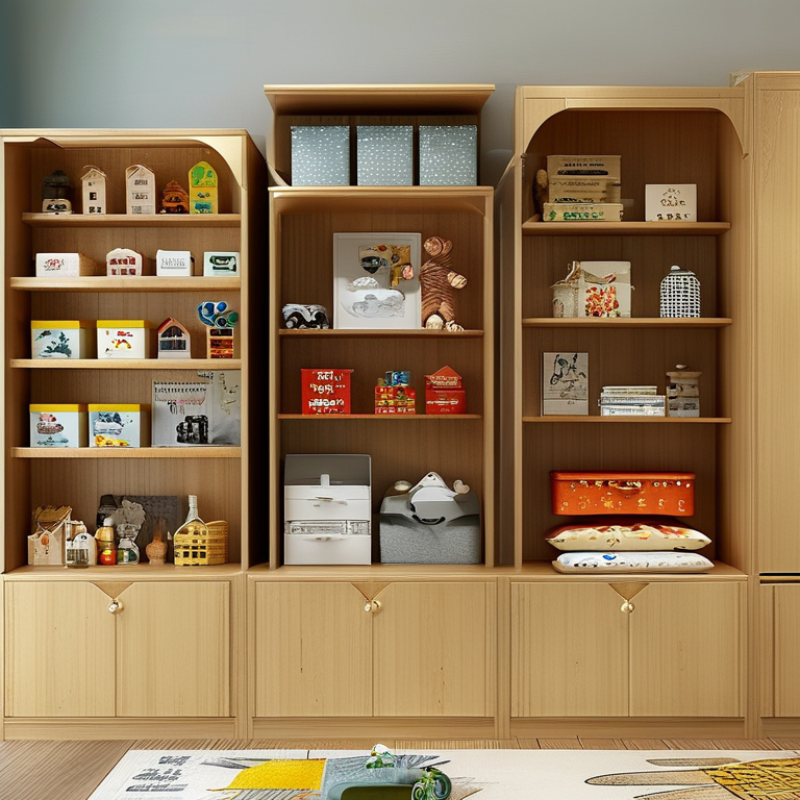
A strong Chinese kids room storage supplier does more than quote a low factory price. In real projects, the useful test begins with a sample. Check whether drawers glide smoothly, corners feel rounded, and small parts stay secure after repeated handling. Experienced suppliers explain material choices clearly, including plywood, solid wood, or tested board options. They should provide measurable details, not vague claims: load limits, coating specifications, moisture resistance, and production tolerances. Ask for independent test reports where appropriate. A reliable factory also welcomes a pre-production sample and records every approved detail. Small differences matter. A handle placed too high can frustrate a child.
Professional suppliers show how they control quality on the production line. Look for incoming material checks, in-process inspections, and final carton reviews with photographs or written records. Clear communication matters when dimensions, colors, and packaging change. A capable export team can prepare accurate drawings, packing lists, and shipping documents without hiding uncertainties. It should also discuss safer packaging, assembly guidance, and responsible material sourcing. Factory visits, video inspections, and third-party audits can strengthen confidence, although none replaces careful evaluation. No supplier is perfect. I once saw a beautiful prototype fail because its base flexed under ordinary use. That mistake was useful; it proved why samples need practical testing, not just attractive photographs. Response speed helps, but honest answers help more.
Kids’ room storage now covers more than a simple toy box. Common options include open cubbies, fabric bins, bookcases, wardrobes, under-bed drawers, rolling carts, and storage benches. Open shelves keep picture books visible, while labeled bins collect blocks, plush toys, and craft materials. Wall-mounted pockets can hold small items, but they need secure installation and careful height planning.
Industry reports show why this category keeps expanding. Grand View Research valued the global home furniture market at about USD 552 billion in 2023 and forecasts continued growth through 2030. Kids’ storage is only one segment, so this figure should not be treated as a direct market size. Still, it reflects stronger demand for flexible household organization. Research also increasingly connects usable home design with children’s independence. Low shelves help a child return toys without adult assistance.
Safety must shape product selection. The U.S. Consumer Product Safety Commission reports that furniture tip-over incidents continue causing serious injuries, especially among children. Tall bookcases and wardrobes should include tested anti-tip hardware, stable bases, and rounded edges. Small rooms may benefit from stackable bins, though unstable stacking creates another risk. I have found that “maximum capacity” labels are often overlooked. That is a mistake. Storage should match a child’s reach, habits, and room layout, not only its advertised volume. Deathly oversized furniture is clearly an unattractive solution.
China Best Kids Room Storage Suppliers?
How to Evaluate Product Quality, Safety, and Certifications
A reliable supplier should provide a clear product specification, not only attractive photos. Check board thickness, joint strength, surface finish, and drawer movement. A sample inspection often reveals more than a catalog. Run a hand across every corner. Sharp edges, loose handles, or uneven gaps need correction before purchase. Ask whether materials resist moisture and daily cleaning. A strong smell may raise concern, but smell alone cannot prove chemical safety.
Children’s storage products should include stable bases, rounded edges, secure fasteners, and suitable anti-tip solutions. Test a cabinet with repeated opening and closing. Place reasonable weight inside, then inspect wobbling and distortion. Ask for test reports covering mechanical strength, flammability where applicable, and restricted substances. Requirements vary by destination market. Therefore, the supplier should identify the exact standard and testing scope.
Certification documents deserve careful verification. Check the certificate holder, factory address, product model, issuing laboratory, test date, and validity period. Confirm that the report matches the actual materials and design. A certificate for one shelf cannot automatically cover a different cabinet. Factory experience also matters. Request production photos, inspection records, packaging tests, and corrective-action reports. I have seen polished samples hide weaker mass-production details. That possibility deserves attention. No supplier is perfect, and transparent answers often matter more than impressive claims.
Finding reliable Chinese kids room storage suppliers requires more than searching for low prices. Start with established sourcing platforms, regional trade fairs, and verified manufacturer directories. Request the supplier’s business license, factory address, export history, and product catalog. A video tour can reveal useful details, but it is not proof by itself. Photos can hide crowded workshops or outsourced production.
Compare suppliers with one simple spreadsheet. Record material type, dimensions, minimum order quantity, sample cost, production time, packaging method, and payment terms. Ask whether the storage units use rounded corners, stable bases, non-toxic finishes, and anti-tip hardware. Request current testing documents for the target market, then confirm them with an independent laboratory when possible. This step costs more. It may prevent expensive problems later.
Order samples from at least three suppliers. Check drawer movement, surface odor, sharp edges, screw quality, and carton strength. Put the sample through ordinary use, not just showroom inspection. A cabinet that looks sturdy may wobble on a real floor. I would also ask for a detailed inspection checklist before mass production. Supplier communication can feel smooth at first, yet small changes may be missed in translation. Keep drawings, approved samples, and revisions in writing. One weakness remains: factory information can change after verification, so repeat key checks before placing a large order.
| Supplier Type | Common Manufacturing Area | Typical Product Focus | Typical MOQ Range | Typical Sample Lead Time | Typical Bulk Lead Time | Best Use Case | Reliability Checks |
|---|---|---|---|---|---|---|---|
| Direct furniture manufacturer | Eastern and southern China furniture clusters | Bookcases Toy cabinets Wardrobes Storage benches | 100–500 units per design | 7–20 days | 30–60 days after sample approval | Private-label programs and repeat orders with stable specifications | Factory video audit, production-line photos, material specifications, pre-shipment inspection, and references for comparable export orders |
| Wood and panel furniture specialist | Areas known for panel processing and home-furniture production | MDF storage units Plywood shelves Modular organizers | 200–1,000 units per SKU | 10–25 days | 35–65 days | Flat-pack products requiring optimized carton size and efficient shipping | Panel grade, formaldehyde-emission documentation, edge-banding quality, load testing, and assembly instructions |
| Metal and wire storage manufacturer | Metal-processing and hardware manufacturing regions | Wire baskets Metal racks Wall organizers | 300–2,000 units per design | 7–18 days | 25–50 days | Lightweight, durable storage for closets, playrooms, and study areas | Coating adhesion test, rust-resistance evidence, weld inspection, sharp-edge control, and load-capacity test |
| Fabric and soft-storage manufacturer | Textile and sewn-product production regions | Collapsible bins Toy bags Hanging organizers Fabric baskets | 500–3,000 units per color or design | 7–15 days | 25–45 days | Color-rich collections, seasonal products, and lower shipping weight | Fabric composition, colorfastness, seam strength, odor control, zipper safety, and packaging durability |
| Plastic storage manufacturer | Plastic injection-molding and household-goods clusters | Stackable boxes Drawer organizers Small-part bins | 1,000–10,000 units per mold or color | 15–35 days when a new mold is required | 30–60 days | High-volume products with standardized dimensions and washable surfaces | Material declaration, odor assessment, dimensional tolerance, impact testing, mold ownership terms, and color consistency |
| Rattan, bamboo, or natural-fiber supplier | Regions with established bamboo, rattan, and woven-goods production | Baskets Toy hampers Woven shelves Decorative storage | 100–800 units per design | 10–25 days | 35–70 days | Natural-material collections and premium room décor | Moisture control, pest-treatment records, fiber strength, splinter inspection, odor check, and consistent weaving quality |
| OEM and product-development factory | Established export-oriented manufacturing zones | Custom dimensions New product development Mixed materials | 300–2,000 units per approved design | 20–45 days | 45–90 days | Retailers requiring exclusive designs, custom packaging, or coordinated product ranges | Engineering drawings, prototype approval process, tooling agreement, change-control procedure, and production-capacity evidence |
| Trading and sourcing company | Major export and wholesale distribution centers | Mixed storage products Small trial orders Multi-category sourcing | 20–300 units per item | 7–20 days if stock is available | 25–60 days | Small retailers testing several designs before moving to factory-direct purchasing | Written supplier authorization, transparent factory details, consolidated inspection records, payment protection, and clear responsibility for defects |
Choosing a children’s room storage supplier requires more than comparing prices. Ask for material details, product drawings, and recent quality records. Panels should have smooth edges, stable joints, and low odor. Request test reports for material safety and product durability. Do not accept unclear certificates.
Check the sample carefully. Can a child open the drawer without pinched fingers? Does the unit stay stable when lightly pushed? Measure shelves, handles, and wall clearances against your actual room plan. A supplier may show a perfect sample, yet mass production can vary. Confirm the inspection process, acceptable defect rate, and who pays for rework.
Production capacity also matters. Review the factory’s equipment, workforce, packaging method, and monthly output. Ask for photos or video evidence from current production, not only a polished showroom. Confirm the minimum order quantity, lead time, carton protection, labeling, and spare parts policy. Written answers are safer than friendly promises.
Small details matter. Ask whether color matching is checked under consistent lighting. Confirm that hardware is packed separately and counted. It is easy to focus on appearance and forget installation instructions. I would also request a pre-shipment inspection, although inspections can miss hidden problems. No checking method is perfect. Keep every specification in the purchase agreement.
: Check smooth drawers, rounded corners, tight handles, even gaps, and a stable base. Run your hand across every edge. A sample can disappoint. A beautiful prototype may still wobble during ordinary use.
Ask about plywood, solid wood, or tested board options. Request board thickness, moisture resistance, coating details, load limits, and production tolerances. Vague promises are not enough.
Look for rounded edges, secure fasteners, stable bases, and suitable anti-tip solutions. Open and close drawers repeatedly. Add reasonable weight and check for wobbling. Small handles should remain firmly attached.
Request reports covering mechanical strength, restricted substances, and flammability where applicable. Testing requirements depend on the destination market. Ask for the exact standard and testing scope.
Check the certificate holder, factory address, product model, laboratory, test date, and validity period. Confirm that the document matches the actual materials and design. One shelf certificate cannot automatically cover another cabinet.
Search established sourcing platforms, regional trade fairs, and verified manufacturer directories. Request the business license, factory address, export history, and product catalog. A video tour helps, but it proves little alone.
Use a spreadsheet for materials, dimensions, minimum order quantities, sample costs, production times, and payment terms. Also record packaging methods and approved design changes. This makes hidden differences easier to notice.
Yes, order samples from at least three suppliers when practical. Compare drawer movement, surface odor, screw quality, sharp edges, and carton strength. Test them on a real floor, not only in photographs.
Ask for incoming material checks, production inspections, final carton reviews, and inspection photographs. Request corrective-action records for previous problems. No supplier is perfect. Honest answers matter more than polished claims.
Choosing the right Kids Room Storage supplier in China requires more than comparing prices. A reliable supplier should demonstrate strong manufacturing capabilities, consistent product quality, flexible customization options, stable production capacity, and clear communication. Buyers can explore a wide range of products, including toy organizers, storage bins, bookshelves, wardrobes, cabinets, baskets, and multifunctional furniture designed for children’s rooms. Each product should be practical, durable, easy to clean, and suitable for different room sizes and age groups.
Before making a decision, buyers should carefully evaluate materials, surface finishes, structural stability, rounded edges, weight capacity, and overall safety. Relevant quality inspections and certifications should be verified according to the destination market. Reliable Chinese suppliers can be compared through professional sourcing platforms, trade exhibitions, factory audits, referrals, and direct communication. Before placing an order, confirm product specifications, samples, packaging, minimum order quantities, lead times, payment terms, inspection procedures, customization details, and after-sales responsibilities. A clear agreement and thorough quality check can help reduce risks and support a successful long-term partnership.