The 2026 Fluted Side Table market reflects a wider shift toward tactile, space-conscious furniture. GlobalData’s home furnishings analysis identifies continued demand for adaptable products supporting smaller urban interiors. Grand View Research also forecasts steady growth in the global home furniture market through 2030, driven by premium materials, online retail, and design-led differentiation. These trends matter to global buyers comparing suppliers, finishes, packaging, and long-term value.
A fluted surface is more than decoration. Its vertical grooves catch daylight, soften reflections, and create a warm rhythm beside a sofa or bed. Interior designer Sarah Sherman Samuel has described fluting as a way to “add texture and dimension without overwhelming a room.” That principle explains its appeal across contemporary, Japandi, and transitional interiors. However, buyers should examine groove depth, edge finishing, substrate stability, and coating resistance. Photographs can hide uneven machining. They often do.
This 2026 guide evaluates leading Fluted Side Table options for international purchasing teams, retailers, hospitality projects, and residential buyers. It considers material choices, production consistency, carton protection, assembly requirements, and supplier communication. Sustainability claims also require caution. FSC-certified wood, recycled panels, and low-VOC coatings should be supported by current documentation, not attractive product language alone. Market forecasts are useful, but they are not guarantees. Regional tastes, freight costs, and currency changes can quickly alter the final decision. The best table is not always the most sculptural. It must also arrive safely, remain stable, and perform beside real furniture in real homes.
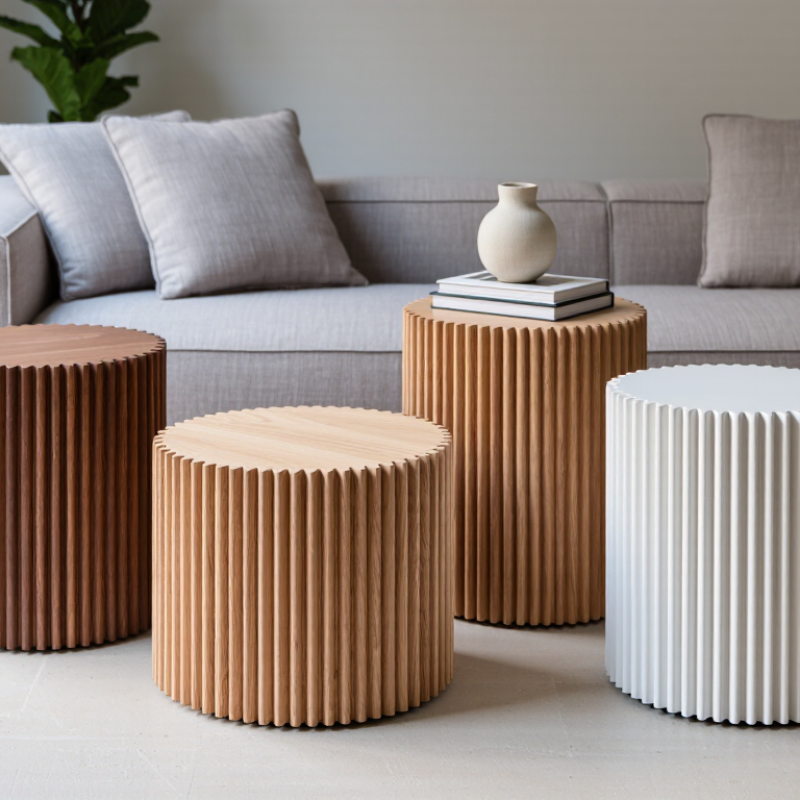
What Defines a Fluted Side Table in 2026
A fluted side table is defined by rhythm, not decoration alone. Its surface uses repeated vertical grooves, usually on the drawer, door, or cylindrical body. In 2026, buyers expect those grooves to support proportion, touch, and function. A successful table feels balanced beside a sofa, not visually noisy. CSIL’s World Furniture Outlook 2024 identifies resilient global furniture demand, while Grand View Research reports continued growth in the home decor market. These signals support refined accent furniture, but not careless ornament.
Material decisions now matter more. Buyers should examine groove depth, edge finishing, panel stability, and cleaning access. Veneer, solid wood, recycled boards, and engineered stone create different visual effects. Moisture resistance is important for hotels and humid homes. A stable base also prevents wobbling on uneven floors. The 2024 Global Consumer Insights Pulse Survey from PwC found that consumers continue to consider sustainability in purchasing decisions. Yet fluting can increase machining time and material waste. That contradiction deserves attention. More texture is not automatically more responsible.
Tips: Request a close-up sample before placing a large order. Rub a cloth across the grooves. Check whether dust collects quickly. Ask for material composition, finish durability, carton testing, and replacement-part support. A 2024 report from the International Trade Centre highlights the importance of reliable product and trade information for international buyers. In practice, small details often decide whether a side table survives shipping and daily use. I would avoid very deep fluting for high-traffic spaces. It looks dramatic, but maintenance becomes tiring.
A practical comparison of common fluted side-table formats, specifications, materials, and global buyer considerations.
| Table Format | Typical Size (W × D × H) |
Common Materials | Fluting Profile | Typical Load Capacity | Best Use | Key 2026 Buyer Criteria |
|---|---|---|---|---|---|---|
| Compact Round Accent Table | Ø 300–450 × 450–600 mm | MDF or solid wood body; veneer, paint, or laminate finish | Vertical grooves, usually 8–20 mm apart | 10–25 kg evenly distributed | Sofas, reading chairs, bedrooms, and hospitality rooms | Small footprint, stable base, scratch resistance, and easy cleaning |
| Standard Living-Room Side Table | Ø 450–600 × 500–650 mm | Engineered wood, solid wood, stone top, or metal frame | Full-height fluted pedestal or fluted apron | 20–40 kg evenly distributed | Living rooms and lounge seating areas | Top stability, proportion with seating, moisture-resistant coating, and repairability |
| C-Shape or Pull-Up Table | 300–450 W × 350–500 D × 550–700 H mm | Powder-coated steel, wood composite, veneer, or compact laminate | Fluted column, edge detail, or decorative front panel | 8–15 kg evenly distributed | Working beside sofas, beds, and occasional laptop use | Clearance under furniture, anti-tip performance, low weight, and easy assembly |
| Nested Fluted Table Set | Small: Ø 350–450 mm; Large: Ø 500–700 mm; height 400–650 mm | MDF, plywood, solid wood, metal, glass, or sintered stone | Matching grooves across two or more tables | 10–30 kg per table, depending on construction | Flexible living-room layouts and compact apartments | Nesting clearance, consistent color matching, packaging efficiency, and reduced shipping volume |
| Fluted Drum Table | Ø 350–550 × 450–650 mm | MDF, plywood, fiberglass, metal, or molded composite | Continuous radial or vertical ribbing around the base | 15–35 kg evenly distributed | Statement interiors, bedrooms, and reception spaces | Balanced center of gravity, seamless joints, impact resistance, and premium surface finish |
| Outdoor-Ready Fluted Side Table | Ø 350–550 × 400–600 mm | Powder-coated aluminum, UV-stabilized resin, stone, or treated hardwood | Molded or machined grooves with drainage-friendly geometry | 15–30 kg evenly distributed | Covered balconies, patios, terraces, and poolside seating | UV stability, corrosion resistance, drainage, wind stability, and outdoor-care instructions |
| Hospitality or Contract Side Table | Ø 400–600 × 500–700 mm | Commercial-grade laminate, hardwood, steel, aluminum, or compact surface | Shallow decorative flutes designed for repeated cleaning | 25–50 kg, subject to tested construction | Hotels, serviced apartments, offices, and public lounges | Commercial durability, replaceable components, cleanability, safety testing, and consistent batch quality |
2026 Top Fluted Side Tables for Global Buyers
Fluted side tables are moving beyond decoration. Their vertical grooves create shadow, texture, and a stronger visual rhythm in compact rooms. Global buyers increasingly prefer warm oak, ash, and walnut tones, especially with matte finishes that hide small fingerprints. Natural veneers remain popular, but responsible sourcing and stable construction matter more than surface appearance alone.
Stone tops are also gaining attention. Sintered stone and engineered quartz offer a refined look with better resistance to heat and moisture. However, they can increase shipping weight and packaging requirements. Recycled aluminum introduces a lighter option, while powder-coated finishes support modern interiors and easier maintenance. Material choices should match the destination climate. Humid regions may require sealed wood, moisture-resistant panels, and carefully protected joints.
Details decide performance. Buyers should inspect groove depth, edge finishing, base stability, and drawer alignment before approving samples. A table that looks elegant online may feel fragile beside a sofa. We have seen narrow bases create tipping concerns on uneven floors. That weakness is easy to overlook. Adjustable feet, reinforced connectors, and clear assembly instructions can improve reliability. Packaging deserves equal attention, particularly for stone components and delicate fluted surfaces. Some buyers still favor deeper grooves, yet shallow grooves are easier to clean and less likely to collect dust. Personal taste remains part of the decision.
In living rooms, fluted side tables add vertical texture beside sofas and lounge chairs. Choose a 45–55 cm height for comfortable lamp access. Round tops soften large sectional seating, while square tops suit sharper layouts. Grand View Research estimated the global home furniture market at about USD 648 billion in 2023, with continued growth through 2030. This supports demand for decorative, adaptable pieces. Yet, some designs still prioritize grooves over stability. A narrow pedestal can wobble beside a busy sofa.
Bedrooms need quieter proportions and practical storage. A compact fluted table with one drawer can hold glasses, books, and charging cables. For small apartments, nesting tables offer flexible use without crowding the floor. In entryways, taller styles work better beside benches, especially with a lower shelf for keys or shoes. Measure the passage carefully. Beautiful furniture can become inconvenient furniture. For hospitality rooms, sealed finishes and rounded edges help cleaning teams work faster, while warm wood tones create a calmer arrival experience.
Material selection now affects purchasing decisions. PwC’s 2024 Voice of the Consumer Survey found that consumers were willing to pay an average 9.7% premium for sustainably produced goods. Buyers may therefore prefer certified wood, recycled panels, and low-emission coatings. However, sustainability claims need documentation, not attractive wording. Buyers should request finish specifications, load testing, carton dimensions, and moisture guidance before ordering internationally. Fluting looks refined, but dust can settle inside every groove. Retailers should provide realistic care instructions.
Global buyers should compare fluted side tables through measurable details, not attractive photographs.
CSIL’s World Furniture Outlook 2024 estimated global furniture consumption at approximately US$766 billion in 2023. That scale makes supplier verification essential.
Start with dimensions. Measure the table beside the intended sofa, leaving enough clearance for knees and cleaning tools. A 45–55 cm height usually works beside many seating designs, but actual comfort depends on the sofa arm. Check top thickness, base width, and declared load capacity.
Fluted surfaces can conceal uneven joins, loose veneers, or trapped dust. Run your fingers along the grooves. They should feel consistent, without sharp edges or open seams. Moisture-resistant board matters in humid shipping routes. Ask for moisture testing details, not vague promises.
Supplier standards reveal more than catalog language.
Request an inspection record, material specification, batch photos, and test reports from an ISO/IEC 17025-accredited laboratory. ANSI/BIFMA X5.5 provides useful guidance for occasional-use tables, including stability and strength testing. ISO 9001 certification can indicate controlled processes, but it does not guarantee perfect furniture.
I have seen certified factories send inconsistent samples. That weakness deserves discussion.
Compare the approved sample with the packed unit, including color, groove spacing, hardware, and carton protection. The 2024 Global Furniture Outlook also highlights continuing pressure on logistics and material costs, so unusually low quotations may hide thinner panels, weaker packaging, or reduced inspection. Ask difficult questions early.
Global Buying, Shipping, and Compliance Considerations
Fluted side tables attract buyers through texture, shadow, and compact dimensions. Global sourcing still depends on measurable details. UNCTAD’s Review of Maritime Transport 2024 reports that over 80% of world merchandise trade by volume moves by sea. A small packaging mistake can therefore travel thousands of kilometres. Request carton drop-test records, moisture protection, and corner reinforcement before placing large orders. Photograph the packed sample. Small proof matters.
Freight planning should include product volume, not only unit price. Ask suppliers for cubic measurements, pallet counts, gross weight, and loading diagrams. The World Bank’s Logistics Performance Index 2023 shows clear differences between countries in customs, infrastructure, and shipment timeliness. Build extra days into delivery promises. Ports are not clocks. Use Incoterms clearly, and confirm who pays duties, inspection fees, demurrage, and local delivery charges.
Compliance needs equal attention. Wood-based panels may require formaldehyde testing, while coatings and adhesives can trigger chemical restrictions in destination markets. European buyers should review REACH obligations and the General Product Safety Regulation, applicable from December 2024. Wood traceability may also matter under the EU Deforestation Regulation. For the United States, check applicable consumer-product labeling, flammability, and chemical-disclosure rules. FSC certification can support responsible sourcing, but it does not replace legal compliance. A perfect landed-cost forecast is rarely honest. Exchange rates, port congestion, and rejected inspections can change it quickly. Build a documented review before shipment.
Indicative ocean-shipping transit times from East Asia to major buying regions. Actual timing depends on port selection, vessel schedules, customs clearance, seasonality, and inland delivery.
For 2026 purchasing plans, buyers should confirm the correct HS classification, verify material and finish requirements, use ISPM 15-compliant wood packaging where applicable, prepare commercial invoices and packing lists, and check destination-market labeling and chemical-safety rules before shipment.
A height between 45 and 55 centimeters often works well. Check the sofa arm first. A lamp should be reachable without leaning. Small height differences can still feel awkward.
Round tops soften large sectional seating and crowded corners. Square tops suit clean, angular furniture arrangements. Leave space for knees and cleaning tools. A narrow base may wobble.
Choose compact proportions and practical storage. One drawer can hold glasses, books, and charging cables. Nesting tables save floor space in small rooms. Pretty is not always useful.
Entryway tables should stand beside benches and leave clear walking space. A lower shelf can hold keys or shoes. Hospitality tables benefit from sealed finishes and rounded edges. Cleaning becomes easier.
Buyers may consider certified wood, recycled panels, and low-emission coatings. Ask for supporting documents. Attractive wording proves very little. Dust may collect inside every groove.
Run your fingers through every groove. The surface should feel even, without sharp edges or open seams. Check top thickness, base width, and load capacity. Photographs can hide weak joins.
Request material specifications, inspection records, batch photographs, and laboratory test reports. Compare the approved sample with the packed unit. Check color, groove spacing, hardware, and carton protection. I would not trust catalog language alone.
Ask for carton dimensions, gross weight, pallet counts, and loading diagrams. Request drop-test records and corner protection details. Photograph the packed sample. Ports rarely follow perfect schedules.
Check panel emissions, coatings, adhesives, labeling, and chemical requirements in the destination market. Verify wood traceability when required. Responsible-sourcing certification does not replace legal compliance. Rules can change.
Include freight, duties, inspections, storage, local delivery, and possible demurrage. Allow extra time for customs and port delays. Exchange rates can shift quickly. A perfect forecast is probably unrealistic.
This guide to the 2026 Fluted Side Table market explains how vertical grooves, balanced proportions, and carefully selected materials define this versatile furniture piece. It explores current design trends, including sustainable wood alternatives, textured finishes, mixed materials, soft neutral colors, and compact forms suited to modern interiors. Readers will also discover how different styles can serve bedrooms, living rooms, entryways, offices, and hospitality spaces, depending on storage needs, height, durability, and visual character.
For global buyers, the guide provides practical methods for comparing construction quality, dimensions, surface treatment, hardware, packaging, and supplier production standards. It also highlights important purchasing considerations such as minimum order quantities, customization, lead times, shipping protection, documentation, labeling, and compliance expectations in different markets. By combining design insight with quality and sourcing guidance, this overview helps buyers select Fluted Side Table products that are attractive, functional, reliable, and suitable for international distribution.